Home Builder and Quantity Surveying Auckland

How Do I Get Custom Home Floor Plans in Auckland That Actually Fit My Site, Budget, and Timeline?

How Do I Get Custom Home Floor Plans in Auckland That Actually Fit My Site, Budget, and Timeline?

You get the right custom home floor plans by starting with your site, your build brief, and your timing before you spend serious money on detailed drawings. If you want a layout that holds up under council review, suits your land, and leads cleanly into a fixed-price build, you need a proper feasibility step, a site walk-thru, and a floor plan shaped around real constraints rather than wishful thinking.
 
Understanding how your floor plan fits into the broader project is critical. For a complete look at how planning, approvals, and construction tie together, read our ultimate new build guide.

Why do floor plans fall apart once you try to build them?

A lot of homeowners make the same mistake. They approve a plan before anyone has properly checked the section, pressure-tested the layout for buildability, or tied the plan to real selections, allowances, and timing. On paper, it looks sorted. On-site, it turns into redesign, delay, and cost pressure.
 
This is the elephant in the room. A floor plan is easy to love when it is still abstract. It gets harder when excavation starts, retaining walls show up, stormwater compliance tightens the layout, or the section has tighter constraints than expected.


In Auckland, slope, retaining, and stormwater are not side issues. They shape the floor plan from day one.


If you are looking for a free quote, the cheapest number, or a quick sketch without pressure testing, we are not the right fit. If you want a floor plan that suits your site, your finish level, and the way you want to live, this is the right place to start.

WANT AN INSTANT ONLINE ESTIMATE?

What should you sort out before you lock in a custom floor plan?

You need clarity on four things first. The site. The layout. The finish level. The build path.
 
The site tells you what is realistic. The layout needs to match how you live. The finish level needs to be defined early enough to stop scope drift. Please ensure the build path is clear so you are not designing in a vacuum.
 
This is why we start with a proper pre-construction path instead of pushing you straight toward a free quote. Our process is designed to prevent you from wasting money on plans that do not suit the land, the brief, or the likely build outcome.

What process gives you a floor plan you can build with confidence?

At JRA Construction, we use a seven-step process to move from ideas to a floor plan that is ready for the real world.
 
1) Design Consultation
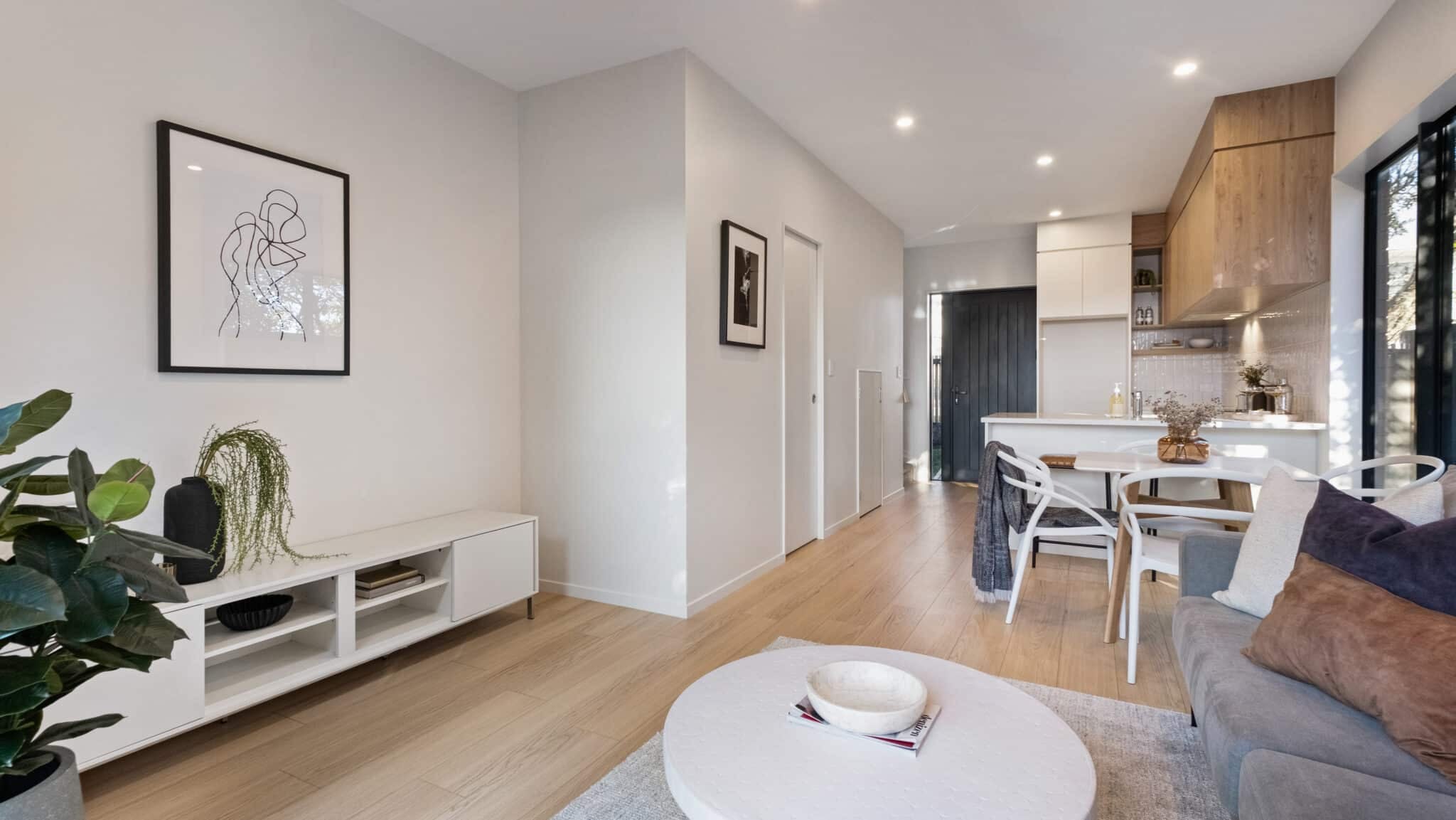
This is where we get clear on how you want the house to work. You might want stronger indoor-outdoor flow, better bedroom separation, a scullery, a home office, or more privacy from neighbouring properties. We turn those preferences into real design priorities.
 
2) Site Walk-Thru
This is where generic thinking ends. We inspect the site, review the practical constraints, and flag any issues that affect the layout. That includes slope, access, excavation pressure, retaining walls for sloping sites, drainage routes, and stormwater compliance.
 
3) Director’s Consultation
You get a straight answer on the project. We talk through risk, buildability, and the planning path. We also point out early decisions that affect timing, procurement, and how much flexibility you still have.
 
4) Selections Checklist & Comparison
A lot of floor plans drift because selections stay vague for too long. Our Selections Checklist & Comparison, backed by the JRA Quality Checklist, ties the layout to real allowances and real decisions. That keeps the plan honest.
 
5) Rough Estimate
This step is there to stop pain later. We identify the big drivers before the layout gets locked too hard. If the plan is carrying pressure from excavation, retaining, glazing, or wet-area complexity, we want that visible early.
 
6) Timeline Estimate
You need a realistic picture of how the job moves from planning to move-in. We map the likely sequence around design, documentation, approvals, procurement, and construction so you have a clear sense of timing.
 
7) Connection to our Preferred Partner Network
This is where we bring in trusted designers, engineers, and suppliers so decisions do not stall. If your project needs extra technical input, specialist product guidance, or better coordination around key details, we connect you with the right people early so the floor plan keeps moving without friction.
 
If you want a home delivered through our custom homes service, this process is what protects you.
 
It also supports our Build with Confidence Guarantee and gives fixed-price contracts a much stronger foundation once the scope is properly defined.
If we cannot explain how a plan gets built, consented, and scheduled, it is not ready to sign off.
15 cleve day hr 14

What site issues in Auckland change a floor plan the most?

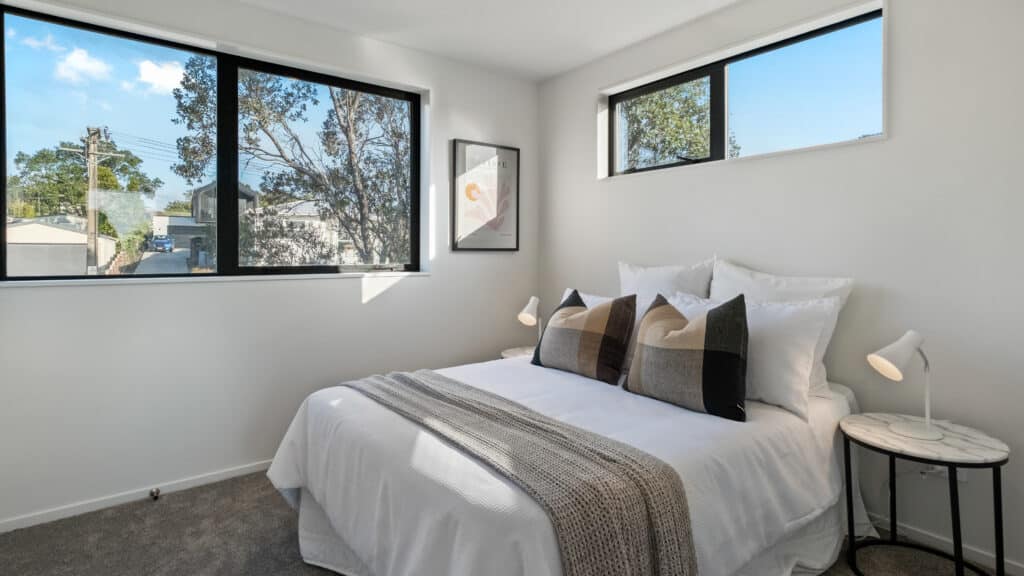
Auckland sites put real pressure on layout decisions. A sloping section changes entry levels, garage position, stair placement, and how the house sits on the land. Tight access changes staging, structure, and how materials move through the site. Drainage and stormwater rules affect floor levels, driveway falls, and service corridors. Neighbouring homes affect privacy, sightlines, glazing, and upper-floor planning.
 
Site factor                                    
What it changes in the floor plan
What we check early                        
Slope                                                
Split levels, garage position, stair layout
Build platform and retaining approach
Tight access                                       
Structure, staging, programme
Site logistics before layout is fixed
Stormwater constraints                                  
Floor levels, driveway falls, service zones
Drainage paths and compliance pressure
Neighbour privacy                                     
Window placement, upper-storey layout
Sightlines and screening
Sun and wind                                        
Living zone orientation, glazing, eaves
Light, comfort, and weather exposure
 
For the Auckland Council’s consent framework, their building consent guide is a useful reference point, especially if you are still learning how approvals connect back to design decisions.

Should you start with a standard plan, modify one, or design from scratch?

It depends on the section and how exact your brief is. A standard plan suits some flat, simple sites.
 
Once the site gets tighter, steeper, or more exposed, a standard plan often starts fighting the land.
 
A modified plan suits some homeowners because it gives a starting point without going fully bespoke from day one. A floor plan from scratch suits you when the site is awkward, the finish level is high, or the way you want to live does not fit a generic template. The right answer is not the cheapest one on paper. It is the one that holds together once the site starts pushing back.

How do you stop budget drift before the floor plan is finished?

Budget drift usually comes from a pile of small decisions, not one dramatic mistake. It starts when the layout gets ahead of the selections, the allowances are too loose, or the site pressure is not dealt with early enough.
 
Excavation, retaining walls for sloping sites, and stormwater compliance are three common Auckland drivers that we need to address directly. So do glazing choices, wet-area count, roof complexity, and joinery scope. This is where our Selections Checklist & Comparison matters. It helps you compare properly, define your finish level earlier, and stop the floor plan from running ahead of the budget. If you want to begin there, exploring our estimate process is the cleanest first step.
 
The best way to protect your timeline is to make fewer, better decisions early, then stick to them.
JRA 42

What does this look like on a real Auckland project?

A good example is a major villa project we are currently doing in Grey Lynn. When you are pouring $600k to $900k into a renovation with an expected end value in the mid- to high-$3 million range, the layout has to do real work. There is no room for a layout that ignores access, sequencing, or existing conditions.
 
We used the Site Walk-Thru and Selections Checklist to protect that investment and lock in the spec before design drifted. That gave the planning process more discipline, reduced the risk of avoidable redesign, and helped keep the project moving toward a stronger premium outcome.
 
If you want to see how we approach projects across different parts of Auckland, read our how it works page for more context on the planning and delivery process.

What should you have ready before you book a consultation?

Bring whatever you have. Existing plans, a site survey, sketches, inspiration, or a rough list of must-haves all help. If you already know where the access is tight, where privacy matters most, or how soon you want to move, that is useful too.
 
You do not need a perfect brief before you talk to us. You do need enough clarity to start making better decisions. Even a rough starting point is enough to begin the conversation properly.

Frequently Asked Questions

It depends on the site, how quickly decisions get made, and how much design pressure the section creates. The fastest route usually starts with a clear brief, a proper Site Walk-Thru, and key selections being defined before the drawings get too far ahead.

Sometimes that works. On many Auckland sections, it creates more friction than people expect. Once slope, drainage, privacy, and access start affecting the layout, a generic plan often becomes harder to adapt than a site-fit concept.

Slope is a major one. So are retaining walls, stormwater compliance, access limits, privacy pressure from neighbours, and how the house sits to the sun. Those issues shape the floor plan from the start, whether you deal with them early or not.

As early as possible. Builder input helps you avoid layouts that are awkward to price, awkward to build, or likely to change once procurement and sequencing get reviewed.

No. We are not the right builder for people looking for the lowest price. Weare a good fit for homeowners who want a clear process, a strong finish level, and a floor plan that stands up once the site and build realities are taken seriously.

Conclusion

Before you get to that stage, it is worth stepping back and asking one simple question: does your floor plan actually reflect what can be built on your site, within your budget, and within your timeline? If there is any gap between the idea and the reality, that gap is where delays, redesign, and cost pressure usually show up. Closing that gap early is what separates a smooth build from a stressful one.
 
If you want custom home floor plans in Auckland that fit your site, budget, and timeline, start with feasibility, site reality, and a clear pre-construction path. The right floor plan comes from better early decisions around layout, selections, buildability, and timing, long before detailed drawings get treated as final. When you are ready to move forward, book a consultation with us.

Start Your Home Extension Journey Today

Thinking about extending your home?
Start by downloading our FREE Preliminary Planning Document.